
Introduction
The electric vehicle market has reached a pivotal moment, with EV sales hitting record numbers and lease transactions accounting for over half of all new electric vehicle deals in recent quarters. While conventional automotive wisdom has long favored purchasing over leasing, the electric vehicle landscape presents a compelling case for reconsidering this traditional approach.
For marketing professionals and business decision-makers evaluating fleet options or personal vehicle strategies, understanding the financial mechanics of electric vehicle leasing versus buying has become crucial. The intersection of federal incentives, rapidly evolving technology, and unique depreciation patterns creates a scenario where leasing often provides superior financial outcomes compared to traditional auto loans.
This analysis examines the strategic advantages of electric vehicle leasing, focusing on quantifiable benefits that impact both individual and corporate transportation decisions.
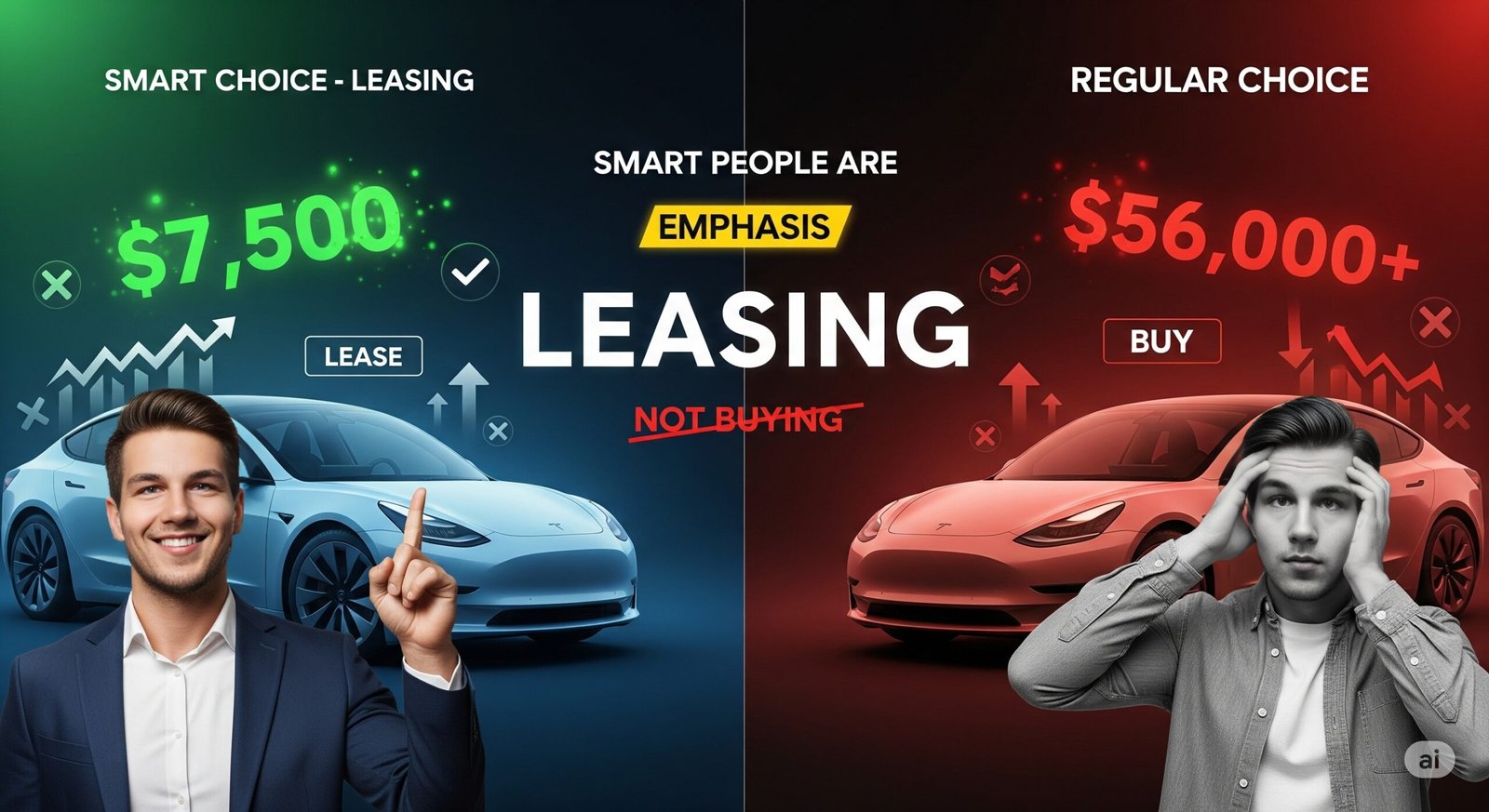
The Federal Tax Credit Advantage: $7,500 in Immediate Value
Simplified Access to Federal Incentives
The most significant advantage of electric vehicle leasing lies in accessing federal tax credits without qualification barriers. When purchasing an EV, buyers must navigate complex eligibility requirements including income limits, vehicle price caps, and manufacturing location restrictions. Many potential buyers discover they don’t qualify for the full $7,500 federal tax credit after making their purchase decision.
Electric vehicle leasing eliminates these complications entirely. The leasing company receives the federal tax credit as a commercial transaction, then typically passes this benefit directly to lessees through reduced monthly payments or upfront cost reductions. This mechanism provides immediate, guaranteed access to the full incentive value regardless of personal tax situations or income levels.
Quantified Payment Reductions
Recent market data reveals that average lease payments for electric vehicles run approximately $175 lower per month compared to equivalent auto loan payments. When combined with the federal tax credit application, lessees often see total monthly savings of $400-500 compared to financing the same vehicle.
For a three-year lease term, this translates to potential savings of $14,400-18,000 over the lease period, representing substantial value that impacts both personal budgets and corporate fleet economics.
Technology Evolution and Asset Flexibility
Rapid Technological Advancement
Electric vehicles represent a convergence of automotive engineering and consumer technology, with advancement cycles more similar to smartphones than traditional automobiles. Battery technology, charging capabilities, autonomous features, and software systems evolve rapidly, often making vehicles significantly more capable within short time frames.
Leasing provides access to these technological improvements without the long-term commitment of ownership. This flexibility becomes particularly valuable as charging infrastructure expands, battery ranges increase, and new features become standard across model lines.
Depreciation Protection
New vehicles typically lose 20% of their value within the first year, with continued depreciation of approximately 10% annually. Electric vehicles face additional depreciation pressures due to rapid technological improvements and increasing model availability.
Electric vehicle leasing transfers depreciation risk to leasing companies, who factor expected residual values into lease terms. Lessees pay only for the vehicle’s expected depreciation during their specific lease period, providing protection against market value fluctuations.
Financial Structure and Cost Predictability
Lower Upfront Investment
Electric vehicle leasing typically requires minimal upfront investment compared to purchasing. While EV purchases often involve substantial down payments to manage monthly loan payments on vehicles averaging $56,000, leases frequently offer options with little to no initial payment.
This capital preservation allows individuals and businesses to allocate resources to other investments or operational needs while still accessing premium electric vehicle technology.
Maintenance and Warranty Coverage
Most electric vehicle leases align with manufacturer warranty periods, ensuring major components remain covered throughout the lease term. This overlap reduces unexpected maintenance costs and provides predictable transportation expenses for budgeting purposes.
Electric vehicles generally require less routine maintenance than internal combustion engines, but when service needs arise, warranty coverage through the lease period provides financial protection and predictable cost structures.
Strategic Considerations for Business Applications
Fleet Management Advantages
For businesses evaluating electric vehicle adoption, leasing offers several strategic advantages. The ability to upgrade fleet vehicles every few years ensures access to the latest efficiency improvements, safety features, and technology integrations that enhance employee productivity and company image.
Additionally, lease payments provide clear operational expense categorization for accounting purposes, while the federal tax credit pass-through improves overall fleet acquisition economics.
Market Positioning and Corporate Responsibility
Companies adopting electric vehicles often do so as part of broader sustainability initiatives and corporate responsibility programs. Leasing enables organizations to demonstrate environmental leadership while maintaining financial flexibility and ensuring their vehicle choices reflect current best practices in sustainable transportation.
Addressing Common Leasing Concerns
Mileage Considerations
Standard lease agreements typically include 10,000-12,000 annual miles, with excess mileage fees averaging $0.25 per mile. However, research indicates electric vehicle drivers typically drive fewer miles than conventional vehicle owners, making mileage restrictions less problematic than commonly perceived.
For high-mileage drivers, negotiating higher mileage allowances during lease inception often provides more cost-effective solutions than paying excess fees.
End-of-Lease Flexibility
Modern lease agreements frequently include purchase options, allowing lessees to buy their vehicles at predetermined residual values if circumstances change. This flexibility provides an exit strategy while maintaining the benefits of reduced monthly payments and federal tax credit access during the lease term.
Market Dynamics and Timing Advantages
Manufacturer Incentives
Automotive manufacturers currently offer aggressive lease incentives to establish electric vehicle market presence and create used vehicle inventory for future sales. These promotional rates often provide below-market financing costs, enhancing the already favorable economics of electric vehicle leasing.
The combination of manufacturer incentives, federal tax credits, and lower operational costs creates a compelling financial package that typically exceeds the benefits available through traditional purchasing arrangements.
Conclusion
The financial landscape surrounding electric vehicle acquisition strongly favors leasing over purchasing for most consumers and businesses. The combination of guaranteed federal tax credit access, protection against rapid technological obsolescence, lower monthly payments, and reduced upfront costs creates a compelling value proposition.
For marketing professionals and business decision-makers evaluating transportation strategies, electric vehicle leasing provides financial advantages while maintaining operational flexibility. The current market environment, characterized by manufacturer incentives and evolving technology, makes this an opportune time to explore electric vehicle leasing options.
The strategic benefits of electric vehicle leasing extend beyond simple cost savings to include risk mitigation, technology access, and financial flexibility that align with modern business needs and personal transportation requirements.
Ready to explore how electric vehicle leasing can benefit your organization or personal transportation needs? Visit our website for personalized analysis and current market opportunities that can help you make the most informed decision for your specific situation.